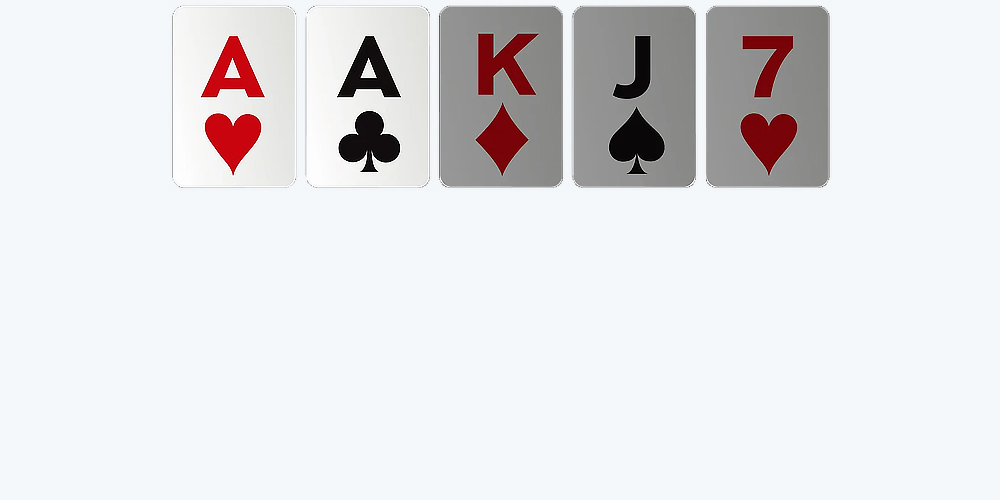
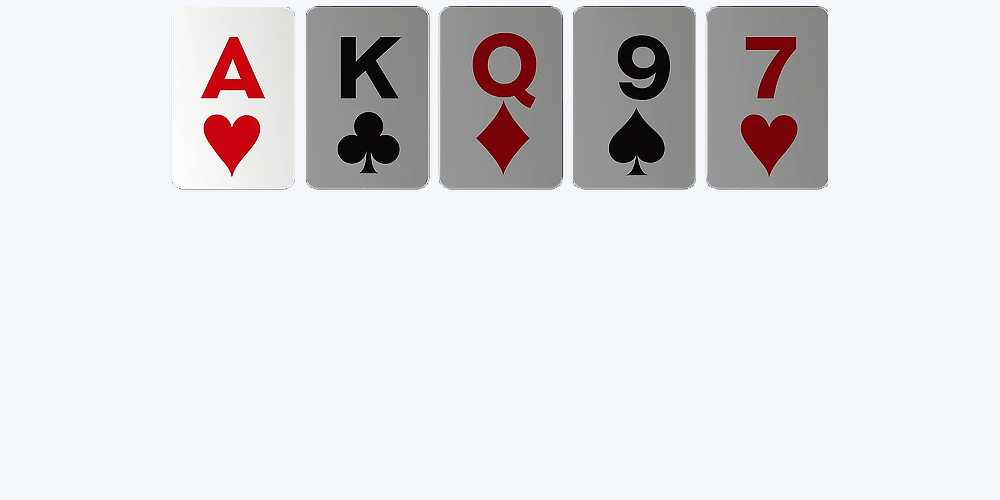
If you’re new to poker, the game can look more complicated than it actually is. There are chips, betting rounds, and different card combinations to remember. But once you understand two things — how a hand is played and how hands are ranked — everything starts to make sense.
Poker is built around comparison. Players receive cards, place bets, and at the end the strongest five-card hand wins. That’s the core idea. Everything else supports that structure.
This guide explains the basic rules and the ranking system in a clear, practical way.
Basic Poker Rules Explained
Before learning hand rankings, it helps to understand how a typical poker hand unfolds.
Betting rounds
Most popular poker variants, including Texas Hold’em and Omaha, follow four betting rounds:
pre-flop (after private cards are dealt);
flop (three community cards revealed);
turn (fourth community card);
river (fifth community card).
After each stage, players can check, bet, call, raise, or fold depending on the action before them.
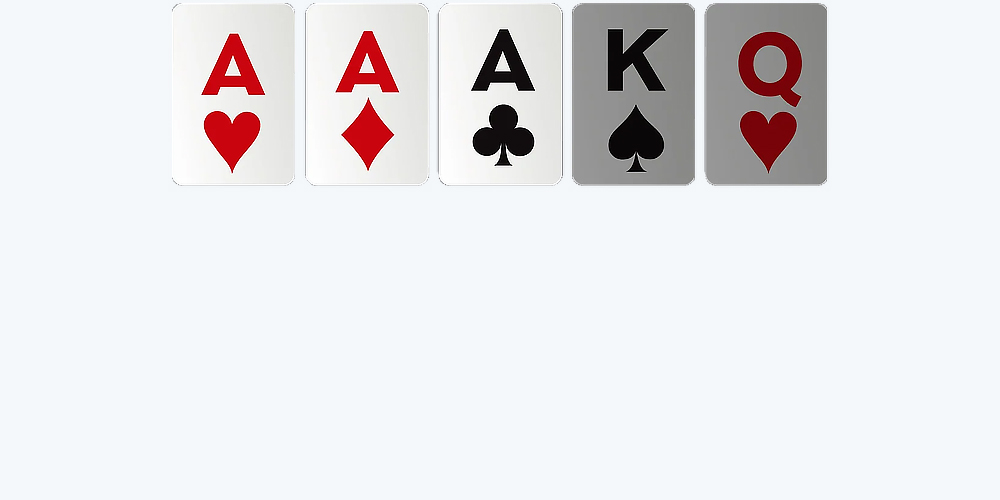
If more than one player remains after the final betting round, the hand goes to showdown. The strongest hand wins the pot. If the board itself is strong enough that nobody’s hole cards improve on it, for example a board of A-K-Q-J-10 in mixed suits, every remaining player simply splits the pot using the board as their hand.
New players may qualify for a matched deposit bonus that can be used toward eligible tournament entries. Minimum deposit required. Wagering requirements apply.
100%
TOTAL SCORE
Dealer button & blinds
In most poker games, a dealer button moves clockwise around the table after each hand. The button marks the nominal dealer position and determines betting order.
Before cards are dealt, two players must post forced bets:
small blind;
big blind.
These bets create action and ensure there is always something in the pot to compete for.
Blinds rotate with the dealer button, so every player eventually takes each position.
Community cards vs hole cards
In games like Texas Hold’em, players receive two private cards (called hole cards). Five community cards are placed face up in the center of the table. Players use any combination of their hole cards and the board to make the best five-card hand.
In Omaha, players receive four hole cards but must use exactly two of them along with three community cards.
Understanding this difference is important because it affects how hands are formed and compared.
Poker Hand Rankings (Strongest to Weakest)
Hand rankings are universal across most poker variants. The goal is always to build the best possible five-card combination.
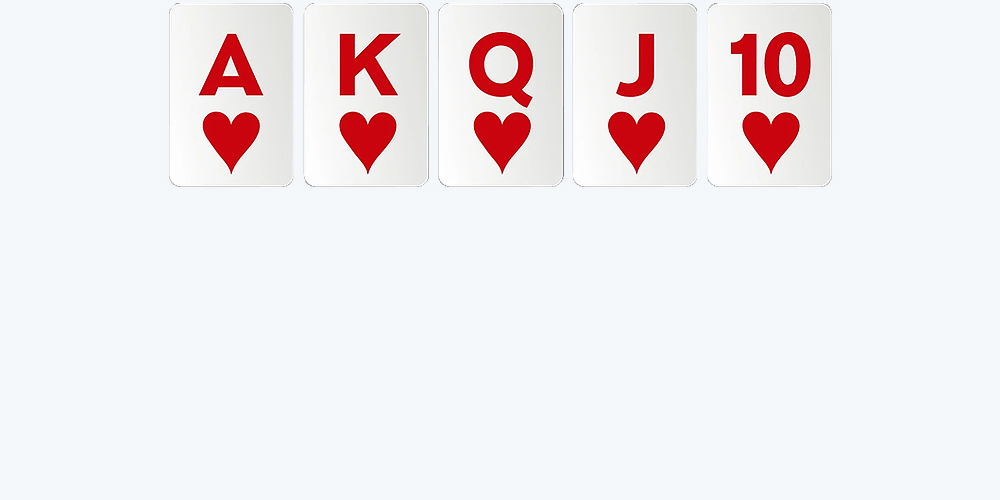
Royal Flush
A royal flush is the strongest possible hand. It consists of A-K-Q-J-10, all in the same suit. No other hand can beat it.
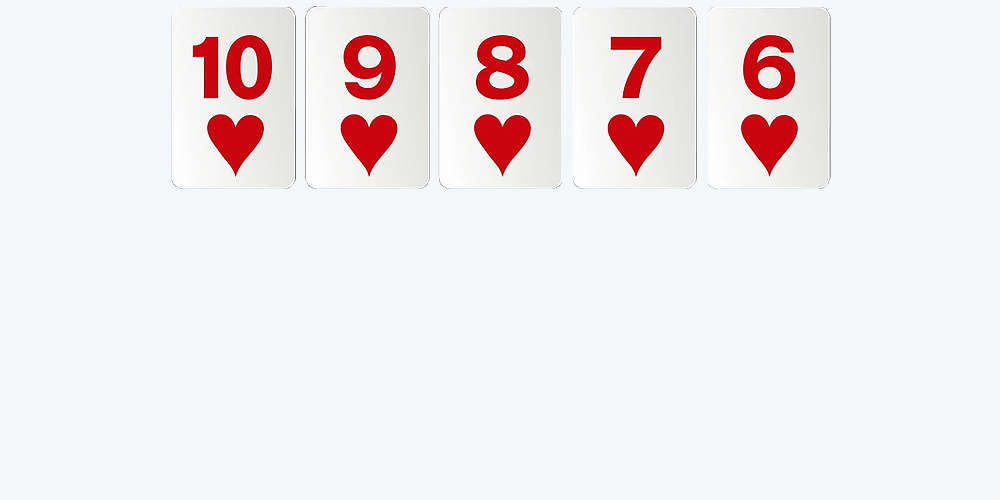
Straight Flush
Five consecutive cards of the same suit. If two players have a straight flush, the higher top card wins.
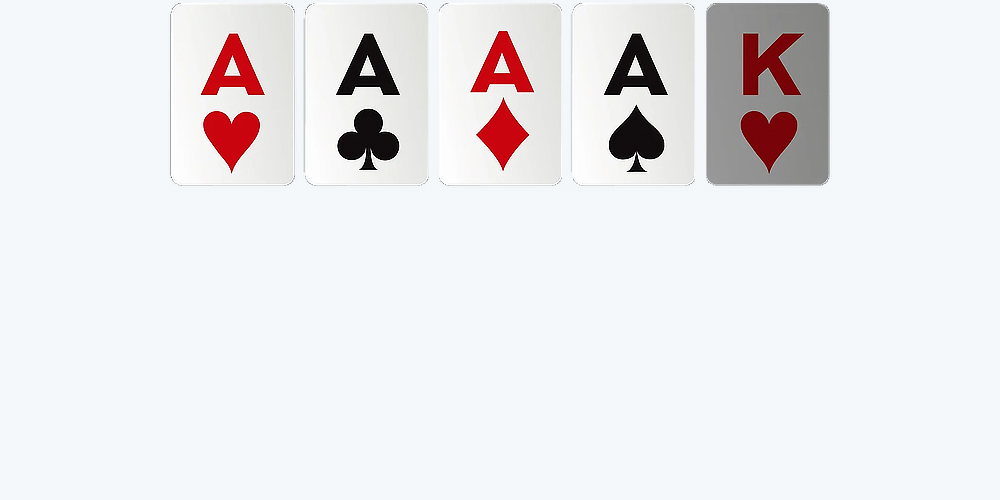
Four of a Kind
Four cards of the same rank. If two players have four of a kind, the higher rank wins.
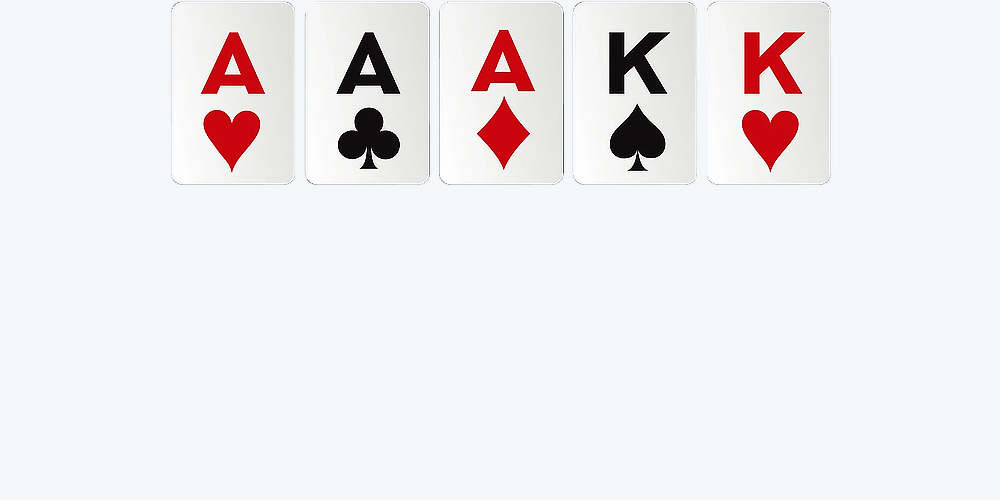
Full House
Three cards of one rank and two cards of another. If both players have a full house, the one with the higher three-of-a-kind wins.
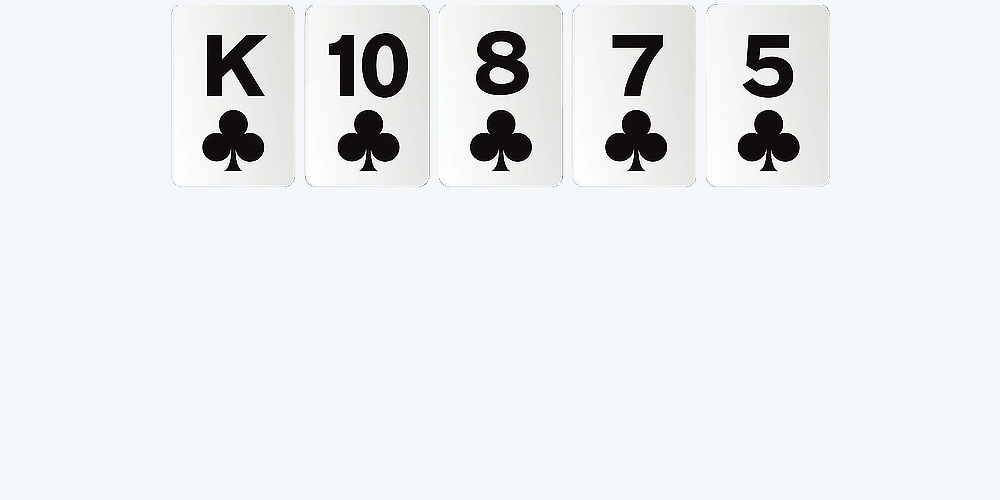
Flush
Five cards of the same suit, not in sequence. If two players have a flush, the highest card determines the winner.
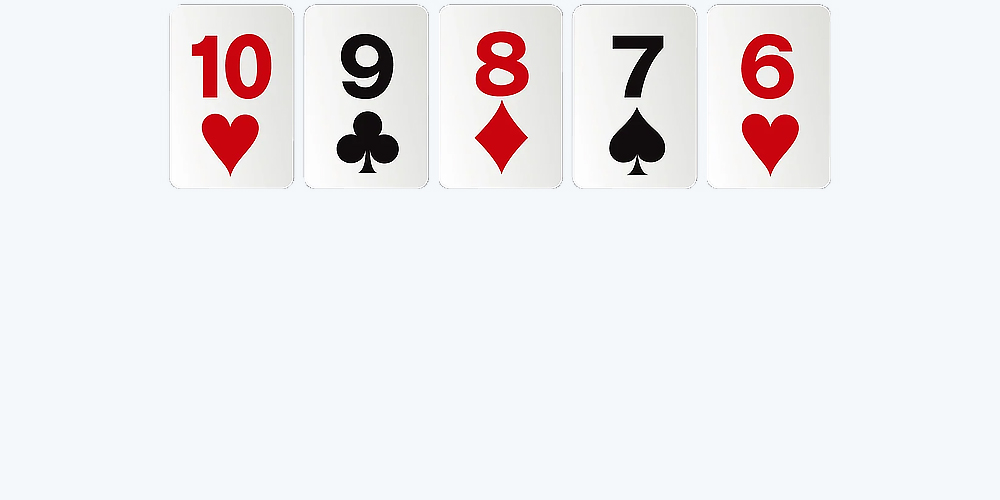
Straight
Five consecutive cards of mixed suits. An ace can be used as either high (A-K-Q-J-10) or low (5-4-3-2-A).
Three of a Kind
Three cards of the same rank. The remaining two cards (kickers) can matter in case of ties.
Two Pair
Two cards of one rank and two cards of another rank. If both players have two pair, the higher pair wins first.
One Pair
Two cards of the same rank. The remaining three cards act as kickers.
High Card
If no player has any of the combinations above, the highest single card wins.
How to Read Poker Hands
Reading hands correctly means more than identifying combinations. You must also understand kickers, ties, and split pots.
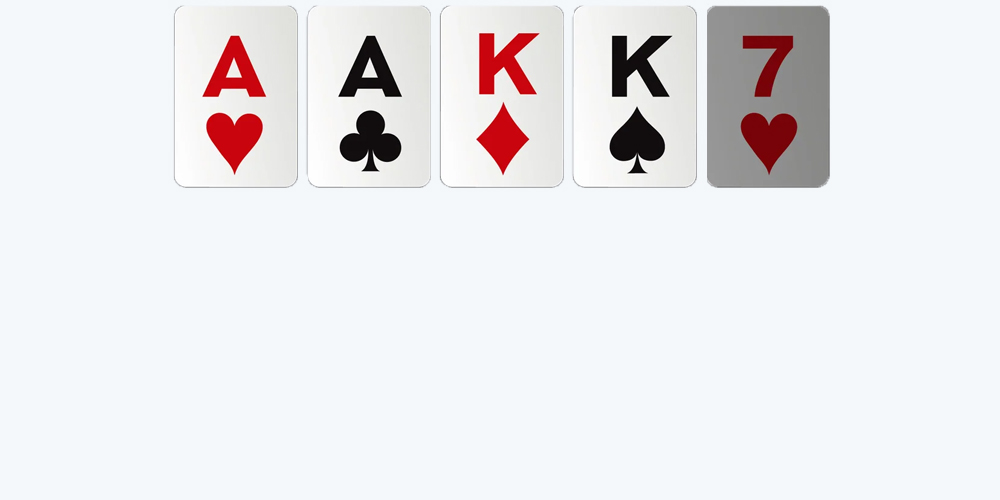
A kicker is the highest unused card that helps break ties. For example, if one player holds K♠ K♦ A♣ and another holds K♥ K♣ Q♦, both have a pair of Kings, but the Ace kicker beats the Queen kicker, so the first player wins the pot.
Split pots occur when two or more players have exactly the same five-card hand, most often because the winning hand is made entirely from the community cards on the board. In that case, the pot is divided equally.
Understanding these small details prevents common misunderstandings at showdown.
Common Poker Rule Mistakes
Even simple rules are often misunderstood by beginners.
Misreading hands
One of the most common errors is thinking a hand is stronger than it actually is. A classic case: K♠ K♥ Q♠ Q♥ 4♣ (two pair, Kings and Queens) looks impressive because two different ranks are working together, but it still loses to a bare 7♠ 7♥ 7♦ 4♠ 2♣ (three of a kind). Another frequent gap is forgetting that a straight flush outranks four of a kind.
A separate frequent mistake is misusing community cards, especially in Omaha, where players must use exactly two hole cards rather than reaching for three or four.
Not understanding blinds
Beginners sometimes underestimate how blinds affect strategy. Because blinds rotate, every player must post them eventually. Ignoring blind pressure often leads to poor decision-making in short-stacked situations.
Understanding blind structure is essential for tournament play in particular.
Practice Poker Online
The fastest way to become comfortable with rules and rankings is repetition. Many poker platforms offer demo or low-stakes tables where you can apply what you’ve learned in real situations.
Playing regularly helps you recognize patterns naturally rather than memorizing charts.
New players may qualify for a matched deposit bonus. Minimum deposit required. Wagering requirements apply. Full terms are available on the promotion page.
100%
TOTAL SCORE
FAQs
Focus on tight hand selection, strong position awareness, and disciplined betting.
Premium pairs and strong high-card combinations are generally reliable starting hands.
Position is one of the most important strategic factors because it determines who acts last.
It’s the practice of choosing stakes and session limits that protect your funds over time, commonly by keeping 20 to 30 buy-ins of your current stake in reserve.
Yes, but selectively and with a clear reason, not as a default action.
Play at low-stakes or demo tables and review your decisions regularly.



 Play now!